
Team
- Personal growth
- Communication
- Feedback vs. (or plus) evaluation?
- Conflict & Feeling safe
- Failure
- How memory tricks us
Teams
"Don't show up to prove, show up to improve"
The title
I’ve worked with a lot of different people, from small teams to very large groups (500+), at various organizations, both companies and NGOs. This made me realize that people are my passion. Since then, work has become almost an “excuse” to be with people, get to know them and make work enjoyable for everyone.
Since I do a ton of different things, it’s hard to “box me” into a title… so I started calling myself an Improver.
What kind of bullsh*t title is that? — you might be wondering.
Well, I try to improve everything around me, whether it’s team-related or tech-related, small or big. That’s always my goal: to help improve and make things better. Teams are one of my favorite topics that I’ve focused on for the last 10 years.
It led to the things below…
Workshops
I've been creating workshops to improve teams for a while.
Being part of several NGOs and working in software engineering, I've always worked with teams.
That led me to build some unusual workshops that make teams question, think, smile, laugh, doubt and wonder, so they can finally understand on their own what can be improved.
The workshops are designed specifically for each organization, according to its preferences and needs, but they can include some of these modules.
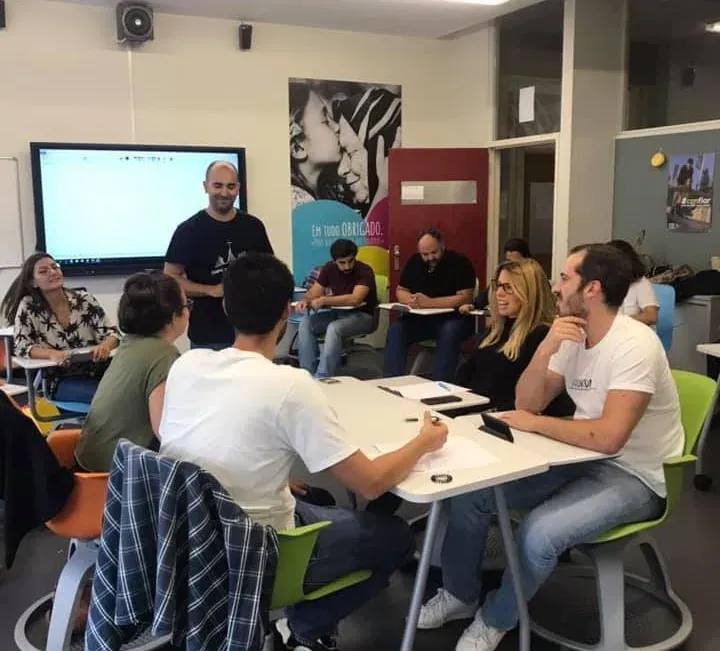

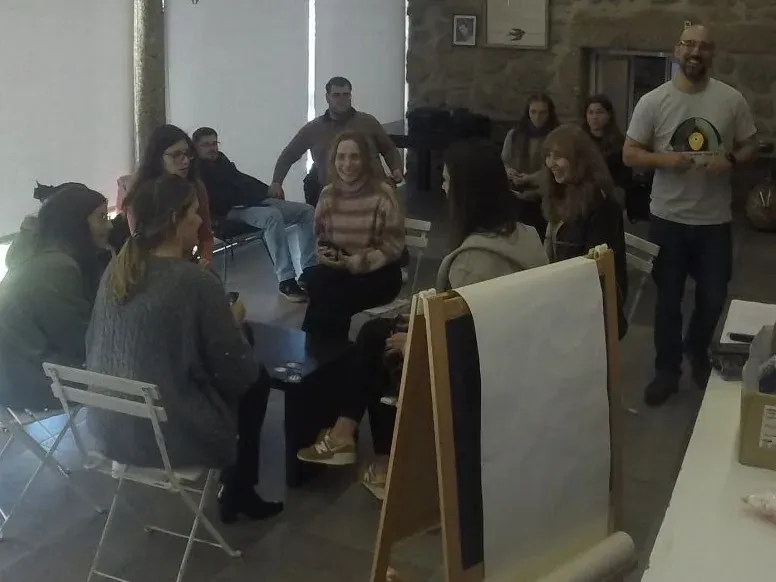

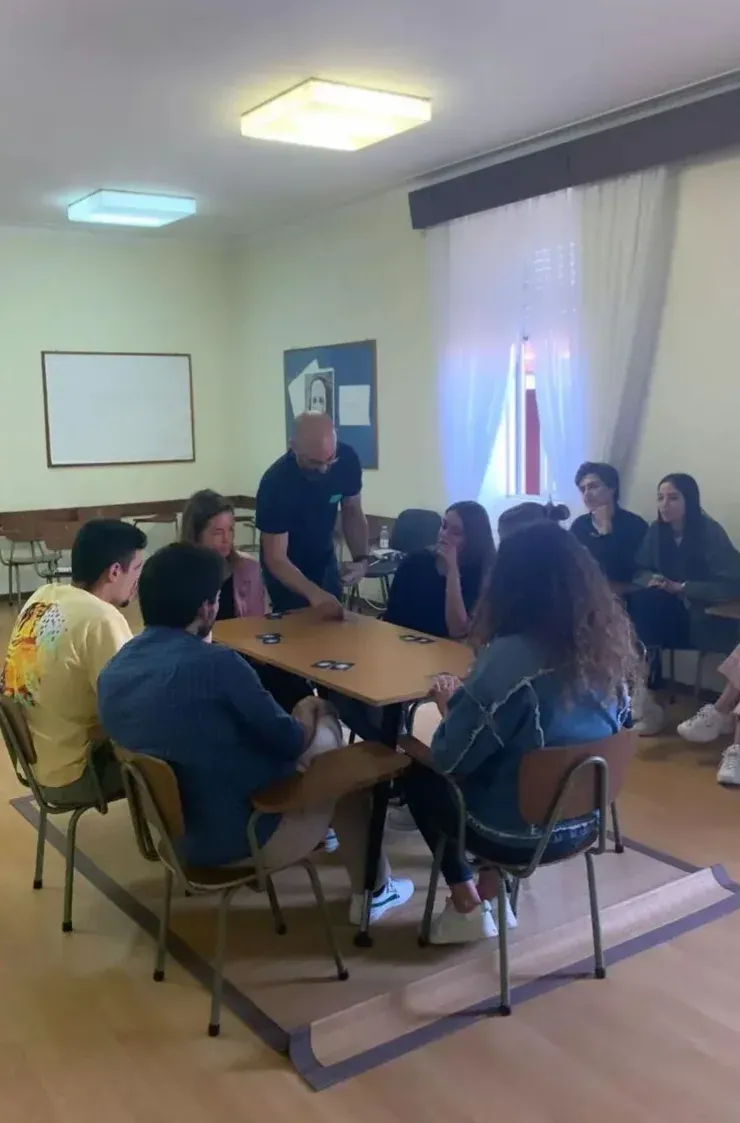
Curious? Fill in the form below and let's talk 🙃
Note: if you work at a non-profit or a school, I'm happy to do this pro bono.
LoopGain: Teams
(some call it evaluation... but that's a long story)
After working in several companies and volunteer organizations, with teams from very small to very large, we found one thing that was always an issue: Empathy-driven Feedback
This happened at organizations that had evaluation processes and at ones that preferred spontaneous day-to-day feedback. It happened with waterfall, with agile and with no standard methodology at all... all lacked a common time for teams to really stop and talk!
Talk about how we feel, what we like, dislike and how to improve as a team and enjoy our work even more!
Yes, most of us gave feedback to one another, but… we were mainly addressing superficial stuff, or just work-related processes, so…
I envision a session focused on the team:
We provide training on feedback both for session moderators and teams, reach me.
 (LoopGain: Teams app)
The talk
The slides behind LoopGain sessions: why feedback matters, how a session runs and how to facilitate one. Swipe, use the arrows or jump to a chapter.
Don’t wait for the CHAOS
to think about Feedback
Pedro Vicente · LoopGain
Why feedback?
Preamble: I won’t follow “dictionary definitions”, rather the mindset each one tends to relate with…
Feedback
Is supposed to be nonjudgmental and as neutral as possible. It provides information the person can work off of, and helps them shape or form themselves. It doesn’t assume a final view over any subject: it’s more like a view, an opinion.
vs
Evaluation
Is a final decision, in contrast to the process of feedback. It presents a judgment: whether someone has met a goal or not. It is not given at a point when the person is able to make changes.
Speaker noteBased on Nancy Alarcon’s definitions.
Why feedback?
Does this matter?
Why?
Entropy!
Why feedback?
Entropy is simply a measure of disorder and affects all aspects of our daily lives. In fact, you can think of it as nature’s tax.
Left unchecked, disorder increases over time. Energy disperses, and systems dissolve into chaos.
Why feedback?
Entropy No feedback is simply a measure of disorder and affects all aspects of our daily lives. In fact, you can think of it as nature’s team’s work tax.
Left unchecked, disorder increases over time. Energy disperses, and systems teams dissolve into chaos.
Work self
Have you noticed that…
Sometimes you can’t understand someone’s actions?
Work self
“Personal self”
“Work self”
Why?
Work self
For one…
Work isn’t family
You can’t “fire” family.
Speaker noteBesides, it often means that boundaries get violated and people are expected to show inappropriate amounts of commitment and loyalty, even when it’s not in their self-interest.
Work self
So…
Are people using a “work personality” to protect their real self?
Are we ALL doing this at some level?
Work self
The thing is…
Human beings are social creatures — not occasionally or by accident, but always. Sociability is one of our main skills, as both cause and effect.
Work self
Everybody works today (at some level) with a team.
Work self
So are we somehow afraid of our team?
Are we just not able to trust them enough?
Work self
…and if we don’t…
Does it actually matter? Isn’t this all fluffy unicorn bullsh*t?
We need to get sh*t done. 💥 Period.
Social cohesion
Well…
Organizations (and teams) are often run according to the “SuperChicken model”, where the value is placed on star employees who outperform others.
Social cohesion
But it is social cohesion that drives most high-achieving teams — built every coffee break, every time one team member asks another for help — that leads over time to great results.
— Margaret Heffernan
Social cohesion
What is social cohesion?
The extent of connectedness and solidarity among groups in society. It has two main dimensions:
Social cohesion
It matters.
Social cohesion
When it feels like you live with a psychopath…
Speaker noteSmall things…
Social cohesion
When it feels like you live work with a psychopath…
Speaker noteYou know that feeling when you have worked with someone long enough that small details drive you crazy?
Social cohesion
We are all psychopaths for someone… and we don’t know.
Speaker noteSomeone worked with us for 6+ months without ever mentioning it.
Social cohesion
Have you seen spontaneous feedback kick in?
Expectations: most people aren’t expecting (or used to) receiving or giving it.
Social cohesion
Would you ask someone if you could give them feedback…
…if it was just positive feedback?
Speaker noteWhat do you expect when someone says “Can I give you feedback?” Doesn’t it sound negative, since people usually only ask when there’s a bad part? Don’t get me started on the sh*t sandwich model…
Social cohesion
How many people ask for feedback…
…actually expecting just the positive?
Social cohesion
What makes a great team?
Fluffy unicorn talk again? Google’s re:Work found five things:
Social cohesion
Can you feel safe with, or actually trust, someone you don’t know?
And if you do know them, can you trust them if you don’t understand them?
Social cohesion
What can build trust?
Social cohesion
Built every coffee break, every time one team member asks another for help — that leads over time to great results.
Social cohesion
How we did it:
Gut feeling and experiments
Social cohesion
Social cohesion takes time and trust.
So how do we “fast forward” it?
Social cohesion
Action plan
Social cohesion
So… we created a place where people:
Either in the same room or remotely.
A session
It’s actually simple
Speaker noteSit down… (If remote, post a list of names in order — alphabetically works.)
A session
Four cards, one of each type
The facilitator picks them before the session.
A session
Paul: I’ll volunteer to be the first to receive feedback.
Remember that “your truth” is not the absolute truth. It’s just your point of view.
A session
Facilitator tip
Clockwise
(If remote, alphabetically.)
A session
Facilitator tip
Be time conscious
Using a time timer is a good way.
Remote: share your screen with timer.pizza.
A session
A few minutes for everyone to think about it, in silence, and…
GO!
A session
John: Great, I’ll start… (answers the positive and improvement questions about Paul)
Giving feedbackReceiving it
A session
Martha: Now me… (answers the positive and improvement questions about Paul)
Giving feedbackReceiving it
A session
Facilitator tip
Typical misconception:
Thinking that you should reply to the feedback you receive.
This is not a conversation. Those are opinions: you can agree or disagree, but the idea is not to discuss them (at least not there — you can catch up after).
A session
Me: (answers the positive and improvement questions about Paul)
Giving feedbackReceiving it
A session
Facilitator tip
Typical misconception:
Thinking that being honest is being rude.
A session
Jonah: (answers the positive and improvement questions about Paul)
Giving feedbackReceiving it
A session
Up until it reaches Paul again…
Paul: Thanks for the feedback! So, about the personal question… (answers it)
A session
Great! Paul’s feedback loop is done.
Let’s jump to the next person…
A session
Martha: So, about John…
Giving feedbackReceiving it
A session
Facilitator tip
As a rule of thumb, the session takes 10 minutes per person.
So a team of 6 takes about an hour. Set that, and keep it visible all the time.
Remote: share your screen with timer.pizza.
A session
Steward: So, about John…
Giving feedbackReceiving it
A session
All done!
Use 2–5 minutes to check how the team felt:
Your questions
“Great! I have issues within my team, I want to do it!”
Your questions
Typical misconception
The main goal of feedback should not be to solve issues.
The goal of feedback must be to improve people (and teams). Solving issues is a byproduct. 🚀
Your questions
“Hey you. Yes, you all… bla bla bla feedback.”
Boring!!!
Your questions
OK then… let’s play a game:
Build your question
Your questions
Rules
Positive reinforcement
Appraise what we value as good.
Bad exampleName a good thing about John
Better exampleName 3 things… something impressive
Your questions
Rules
Improvements
Focus on actions, not on issues or the person.
Bad exampleWhat do you feel ___ does wrong?
Better exampleWhat can I help ___ improve? Why?
Bad exampleWhat are the biggest weaknesses of ___?
Better exampleWhat can the team help ___ learn?
Your questions
Rules
Personal question
Don’t focus on teamwork. Go to the “unknown” part of each person on the team.
Bad exampleWhat do you like to do at work?
Better exampleWhat is your biggest hobby?
Your questions
Just to be clear…
I don’t think this is a silver bullet.
The silver bullet is… to grow a team enough that they can define their own ways.
Your questions
That’s what happened with the team where all this started.
Your questions
This seems too simple to work…
…but it has already spread this far!
Your questions
⚠️ Warning ⚠️
There are a ton of different ways to do this.
Pick what suits the team best.
Facilitator guide
Things to think about…
People are really different. Understanding them is a really good way to grow a team.
Facilitator guide
Why do we need this?
When people say “I want to give you feedback”, there’s a negative feeling attached.
Speaker noteIf you wanted to give positive feedback, you probably wouldn’t ask that question.
Facilitator guide
Why…
cards?
Reduce friction…
Within 2 minutes people are able to start the feedback session. Most people want a framework to start off.
Facilitator guide
Motto?
What is it for?
During work days we’re all probably pretty busy, rushing from meeting to meeting.
To start a feedback session we need to change the mood and mindset. The motto is there for that: make a moment of silence and read it.
Silence without any device, although likely awkward at first, is very important to let people actually focus.
Facilitator guide
The facilitator
Warning: facilitators from within the team get better results, as people are more comfortable.
Facilitator guide
Before the session, the facilitator:
Facilitator guide
Get the team together
On site
Remote or mixed
Facilitator guide
Start with the Motto card
“The best teams are built on trust. The only way to trust is to know one another.”
The facilitator reads it and everyone stays in silence for 30 seconds or more. It moves the mood away from running-and-stress mode, to a more suitable mindset.
Facilitator guide
After the silence, reveal the 2 questions
Everyone in the session answers them about everyone else:
Facilitator guide
Facilitator tip
Typical misconception:
Thinking that the answers should be work-related only.
We’re breaking that concept: speak about what is important, whatever that is. Remember to explain this to the team.
Facilitator guide
Read the questions out loud, and write them down too — at the same time or right after.
On site
Write them on a whiteboard, or on a big piece of paper on the wall.
Remote
Send them via chat.
Facilitator guide
It seems like a sh*t sandw…
No. Nonjudgmental, remember? And…
Facilitator guide
Finally, the one everyone answers about themselves…
Personal question
Example: “What’s the best thing that happened to me this month, either at work or outside of it?”
Facilitator guide
Set 15 minutes
In silence, so people can think about (and note down) what they will say.
Keep the time visible. Remote: share your screen with timer.pizza.
Facilitator guide
Facilitator tip
Typical misconception:
Being in silence will feel awkward with some teams.
Get people on board anyway: it makes for better feedback.
Facilitator guide
Time’s up! START!
Give each person 10 minutes, plus 10 minutes for closing. How long for your team?
Questions?
How do you…
build the questions?
Questions are pre-defined to avoid negative or aggressive tones, and to drive constructive feedback.
Positive: created to appraise what people do best.
Improvements: focus on actions (“how to improve”), not people.
Personal questions: made to get to know the person outside the team’s usual environment.
I call it empathy-driven feedback… or LoopGain, for short!
Questions?
Why…
do a lot of questions ask for 3 things?
At first, people probably won’t be able to give 3 things… but it makes them think hard, and gives them an incentive to train their eyes between sessions to notice positive things they wouldn’t even think about.
Questions?
The team has some issues…
How do we address them with this?
Build or choose the right questions. They will surface the issue without having to be explicit about it.
Questions?
Are sessions really honest?
Do they actually tackle the hard topics?
It all depends on the team. Are they actually willing to do the session, or is it just an imposed thing?
Questions?
How does culture affect it?
Does it work for everyone?
Different cultures will make it simpler or harder. Cultures that are less keen to give or receive feedback will have a harder time starting.
Questions?
Team vs one-on-one
When to use each one?
You are the right person to understand what will help. A team session improves the team’s relationships, but you might need one-on-one conversations about specific topics.
Questions?
How often should we do it?
Does it fit Scrum, Kanban?
How the team works doesn’t matter. Teams are teams. People are people.
Questions?
This is too simple…
Do we need help setting it up?
Feel free to get in touch and we’ll do a feedback training.
Resources
Resources
Hope you have wonderful LoopGain session(s)!
Taking your team from the comfort zone to the trust zone!
1 / 86
Family & Couple
After teams...
Live
I've been a husband for 15+ years and a father (of three) for 12 years... that experience made me want to build something to kick-start conversations and bring (more) empathy-driven feedback to families and couples.
This is now available on LoopGain: Family Moments and LoopGain: Couple Moments.
If you are interested, please reach out to me for more info.
